
Paper Boy Race: Running game
Freeplay IncArcade
4.6958.00 Reviews
- Version
- 1.41.1
- Installs
- 50.00M
- Age Rating
- Teen
Screenshots
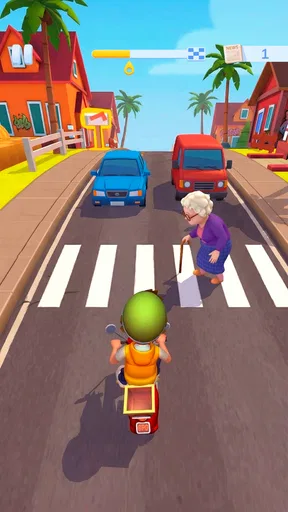
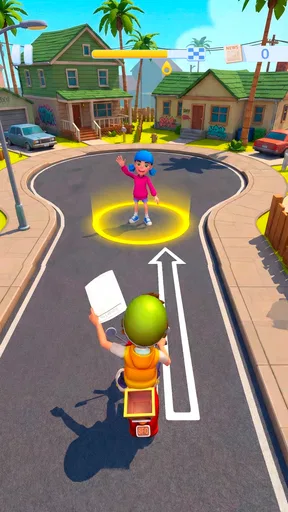
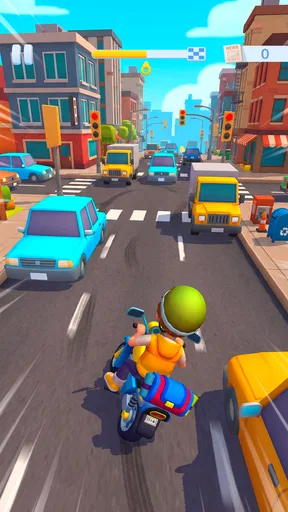
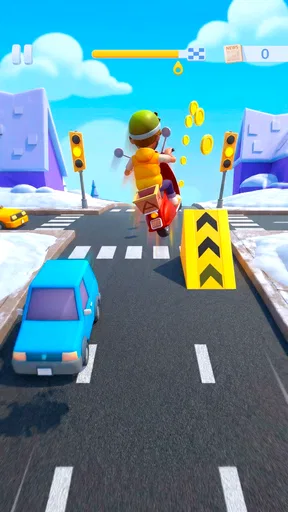
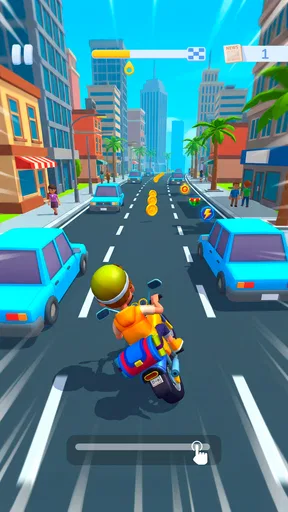
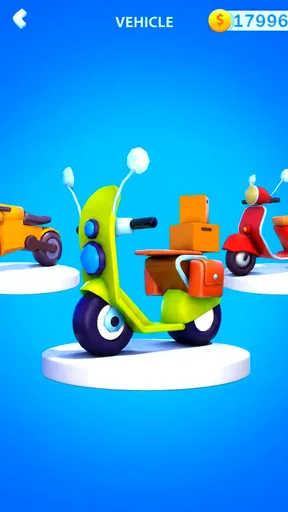
Our Review of Paper Boy Race: Running game
 Analysis by Appyee
I tried Paper Boy Race: Running game as a quick arcade racer, and my first impression was that it understands exactly what kind of session it wants to offer: short, bright, simple, and easy to start. You guide a paper-delivery rider on a motorcycle through a 3D course, trying to keep the run going and finish ahead of the competition. It is not built around a complicated story or a deep simulation model. Its appeal comes from immediate movement, quick decisions, and the satisfying idea of turning an ordinary paper route into a race.
That narrow focus works well when I want something I can play without preparation. I do not need to learn a long list of controls before attempting a run, and the basic premise is understandable almost instantly. At the same time, the simplicity means this is not the right choice for someone looking for a detailed motorcycle simulator, a large open-world game, or a serious competitive racer. I see it as a casual arcade game for brief bursts rather than a replacement for a full racing title.
How the current version feels in everyday play
In its present form, the game is best approached with the mindset of a pick-up-and-play challenge. I can open it during a short break, complete a few attempts, and put it down without feeling that I have abandoned a long campaign. That makes it especially suitable for people who enjoy mobile games in small portions: while waiting for transport, between tasks, or when I want a little action without committing an evening.
The motorcycle perspective gives the familiar running-game format a different rhythm. Instead of simply thinking about a character moving through a lane, I am also mentally managing the feeling of speed and the space around the bike. The paperboy theme adds personality to what could otherwise be a generic obstacle course. Delivering papers is a playful objective, but the racing structure keeps the attention on movement and timing.
I found the strongest moments came when I stopped treating every run as a test of reflexes and started reading the route ahead. Small adjustments made earlier are usually safer than dramatic corrections at the last second. This is one of the more useful habits to develop: look beyond the immediate obstacle, choose a line, and avoid overreacting. The game feels more controlled once I do that, even though the presentation remains light and accessible.
That approach also reveals one of the title’s limitations. The first few sessions can feel more exciting than later attempts if I am expecting a constantly expanding racing experience. The core action remains centered on navigating the course and trying to perform better. Players who need extensive vehicle tuning, a large collection of tracks, or a rich progression system may find the loop too focused.
Controls that reward calm decisions
The controls are approachable, but approachable does not mean completely effortless. The real challenge is not learning which gesture or input moves the rider; it is making that input early enough and with enough restraint. I often improved simply by using smaller corrections. A rushed movement can solve one immediate problem while creating another a moment later.
For a new player, I recommend spending the first attempts learning the width of the motorcycle’s path rather than chasing the best possible result. Notice how quickly the rider changes direction, how much room is needed near obstacles, and whether a tempting route leaves enough space for the next decision. This turns early failures into useful practice instead of random frustration.
There is also a practical reason to play with a clear view of the screen. Because the action depends on recognizing what is coming, glare, a crowded display, or an awkward grip can make the game feel less responsive than it really is. I get better results when I hold the phone steadily and keep my thumb movement deliberate. That sounds minor, but it matters more here than in a turn-based game.
Why the paper-delivery theme matters
The paperboy idea is not just decoration. It gives the race a recognizable identity and makes the game easier to remember than a nameless motorcycle runner. I like that contrast between a familiar neighborhood-style job and exaggerated 3D racing action. The result is intentionally silly, which suits quick mobile play.
It also makes the game more approachable for people who are not normally interested in motorcycle games. Someone who would skip a realistic racing simulator may still enjoy the visual joke and the straightforward goal. In my experience, that makes it a better casual recommendation for mixed groups of friends or family members than a more technical racer.
However, the theme should not be mistaken for a detailed delivery simulator. I would not install this expecting route planning, realistic traffic rules, or a carefully modeled courier career. The paper route is the hook; the main experience is still an arcade race built around fast reactions and repeat attempts.
What the release history tells me about the product
The game was released on November 1, 2021, and the current version is 1.41.1. That version number suggests a product that has continued beyond its initial launch rather than remaining frozen at its first public build. I treat that as a positive sign for basic maintenance, although a version number alone does not tell me exactly which parts of the experience changed over time.
For someone installing it today, the practical point is that the current build is the one to judge. Older impressions may describe a different balance, different presentation, or a less polished first version. I would avoid making a decision based only on launch-era reactions. The game has had time to establish its current shape, and my recommendation is based on what the present package offers: a compact arcade loop with a distinctive paper-delivery setting.
The minimum requirement of Android 6.0 also makes the game accessible to people using older Android devices. That does not guarantee identical performance on every phone, because hardware, screen size, and background activity can still affect how comfortable a 3D game feels. Still, the stated operating-system requirement is modest, so I would consider trying it on an older compatible handset before assuming a newer device is necessary.
Freeplay Inc is the developer behind the game. The title’s broad reach is reflected in its audience: it has passed 50 million installs and holds a 4.6 average rating from around 47 thousand ratings. Those figures do not prove that every player will enjoy the same things I did, but they do show that the simple racing concept has connected with a large mobile audience.
The game is free to play, which lowers the barrier to testing it. I can install it, understand the central loop quickly, and decide for myself whether the repeated racing format has enough appeal. I appreciate that kind of low-risk entry, especially for a game whose suitability depends heavily on personal tolerance for short, repetitive arcade sessions.
How the current build affects returning players
Existing players are likely to value familiarity more than dramatic reinvention. If I already enjoy the basic motorcycle-and-paper route formula, a maintained current version lets me return to the same kind of quick challenge without relearning an entirely different game. That consistency is useful for a casual title: I can take a break and come back without needing a tutorial session.
On the other hand, returning players should keep their expectations realistic. A newer version does not automatically transform a focused arcade game into a deep racing career. The central appeal remains the same, and that is both its strength and its boundary. Players who want the game to become a full simulator may be disappointed, while players who simply want more opportunities to repeat short runs may be perfectly satisfied.
I also think the current version is easier to recommend to newcomers than to people who have already exhausted the idea. New players have the pleasure of learning the movement, discovering which decisions work, and improving through repetition. A long-time player may need to enjoy self-imposed goals, such as cleaner runs or more consistent performance, to keep the experience fresh.
Useful ways to fit it into a normal day
My favorite use case is a ten-minute break when I want active entertainment but not a story that will punish me for stopping. I can play a few races, put the phone away, and return later. This makes it more convenient than a large adventure game when my attention is divided or my free time is unpredictable.
It can also work as a gentle introduction to arcade controls. I would recommend it to a younger teenager who enjoys quick racing but is not ready for a more complex driving game, while remembering that the content rating is Teen. The uncomplicated objective is easy to explain, and the paperboy theme gives the game a friendly entry point.
A less obvious use is practicing visual anticipation. Because success depends on reacting to the route rather than memorizing a complicated control system, I can use each attempt to improve how I scan the screen. I try to identify the next safe opening before reaching the current one. That habit transfers well to other lane-based arcade games, even though the game itself remains light entertainment.
I would skip it if I need a calm, passive experience. The racing pace asks for attention, and repeated mistakes can become irritating when I am tired. I would also choose another game if my priority is realistic motorcycle handling, online competition, extensive customization, or a substantial narrative. This title is strongest when I want a playful arcade challenge, not when I want a complete virtual riding hobby.
Where it sits beside other mobile racing choices
Compared with traditional racing games, this one is less concerned with authentic vehicles, track strategy, and long-form competition. That makes it easier to understand but also less rewarding for players who enjoy tuning a bike, learning a circuit corner by corner, or comparing detailed performance statistics. A conventional racer is the better option for those needs.
Compared with endless runners, the motorcycle presentation gives the action a more specific identity. The paper-delivery premise is more memorable than simply running through an abstract environment, and the sense of racing adds urgency. Yet people who prefer endless runners with elaborate character upgrades or a stronger collection system may find this game comparatively narrow.
Its advantage over both alternatives is convenience. I can approach it with almost no background knowledge, and the free price makes experimentation easy. Its trade-off is depth. The more I ask from it, the more clearly I see that it is designed around immediate arcade enjoyment rather than a long-term simulation or social competition platform.
Small habits that improve the experience
I get more from the game when I separate learning attempts from score attempts. During a learning run, I focus on observing the route and testing cautious movement. During a score attempt, I use what I learned and avoid unnecessary risks. Mixing both goals can make a mistake feel worse because I am unsure whether I was experimenting or genuinely trying to perform.
Another useful habit is to avoid playing several rushed attempts after a frustrating failure. The game’s short format makes it tempting to restart immediately, but impatience usually leads to larger movements and poorer timing. I prefer to pause briefly, identify the decision that caused the problem, and try again with one specific adjustment.
Finally, I would not judge the game only by the first run. The opening impression is about novelty, while the lasting question is whether I enjoy refining my reactions. If I like repeating a compact challenge and gradually becoming more consistent, the game has a fair chance of staying on my phone. If I need constant new content to remain interested, the initial charm may fade quickly.
What I would like players to watch going forward
The most important thing to watch is how the current version continues to balance accessibility with replay value. The game already benefits from a clear premise and a low entry barrier. Its long-term appeal depends on whether returning players continue to feel that another attempt is worthwhile, rather than merely repeating the same action without a meaningful personal goal.
I would also pay attention to how comfortable the experience remains across older Android hardware. The minimum support for Android 6.0 broadens access, but 3D movement can feel different from one device to another. Players with older phones should begin with modest expectations and see whether the controls remain comfortable on their particular screen before committing to long sessions.
For new users, the main question is simple: do you enjoy short motorcycle races built around quick decisions and repeat practice? If yes, the free download makes it easy to test without much risk. If your answer is no because you want a detailed career, realistic riding, or a large social racing scene, the game’s recognizable theme will not remove that mismatch.
My final view is positive but specific. I see this as a cheerful, accessible arcade game with a memorable paper-delivery twist, not as a deep motorcycle title. The current version benefits from being established and widely played, while its focused design keeps the experience easy to pick up. My recommendation is to try it for short, energetic sessions, especially if you enjoy improving through repetition. Just install it with the right expectations: the fun is in the next run, the next decision, and the satisfaction of guiding the paperboy through the course a little more cleanly than before.
Verdict
Strengths of Paper Boy Race: Running game
- Simple controls make it easy to start playing immediately.
- Short levels are ideal for quick gaming sessions.
- Colorful visuals give the game a cheerful, casual style.
- Collecting items adds a small incentive to replay levels.
- The running format works well for players who enjoy endless-runner games.
Limitations of Paper Boy Race: Running game
- Gameplay can feel repetitive after several runs.
- Difficulty may increase suddenly in later stages.
- Frequent obstacles can make progress feel dependent on timing.
- The game may offer limited depth for experienced players.
- Ads can interrupt the experience, especially between attempts.
Other Releases by Freeplay Inc
View All
Snake Run Race・3D Running Game
Arcade4.7

Fidget Toys Trading・Pop It 3D
Simulation4.7

Count Masters: Stickman Games
Action4.6

Twerk Race 3d — Fun run game!
Arcade4.2
Similar Picks in This Category
View All
Subway Surfers
SYBO Games4.6

Stickman Party 234 MiniGames
PlayMax Game Studio4.6

Subway Princess Runner
Ivy4.4

Temple Run
Imangi Studios4.2

Zombie Tsunami
Mobigame SAS4.6

Stack Ball - Crash Platforms
CASUAL AZUR GAMES4.5
Frequently Asked Questions
What is Paper Boy Race: Running game about?
Paper Boy Race: Running game is a casual endless-running title in which you control a paperboy riding through colorful streets while delivering newspapers and collecting rewards. The main challenge is to move through each level, avoid obstacles, gather useful items, and reach the finish line with as many successful deliveries as possible. Its simple controls make it easy to start playing.
How do you play Paper Boy Race: Running game?
Gameplay is based on quick swipes or taps, depending on the version and device, to guide your character along the road. You need to change lanes, avoid barriers, collect paper bundles or bonuses, and make accurate deliveries as you progress. Timing is important because the course becomes more demanding, with tighter paths and additional obstacles appearing in later stages.
Is Paper Boy Race: Running game free to download and play?
Paper Boy Race: Running game is generally available as a free download, allowing players to try the core running and delivery challenges without an upfront purchase. However, free-to-play versions may include advertising, optional in-app purchases, or rewards connected to watching videos. Before downloading, it is worth checking the store listing for the current pricing, permissions, and purchase details.
Can Paper Boy Race: Running game be played offline?
Many parts of Paper Boy Race: Running game may work without a constant internet connection, especially the basic running levels. Nevertheless, an internet connection can be required for advertisements, online rewards, analytics, updates, or restoring purchases. If offline access is important to you, test the game after installation with mobile data and Wi-Fi disabled, since availability can vary by version and platform.
Is Paper Boy Race: Running game suitable for children?
The game uses colorful visuals, straightforward mechanics, and non-realistic cartoon action, so it can be accessible to younger players. Even so, parents should review the age rating, advertising, in-app purchase options, and privacy information before allowing children to play. Some versions may display frequent ads or encourage optional purchases, making parental controls useful on both Android and iOS devices.
Play our best games!


